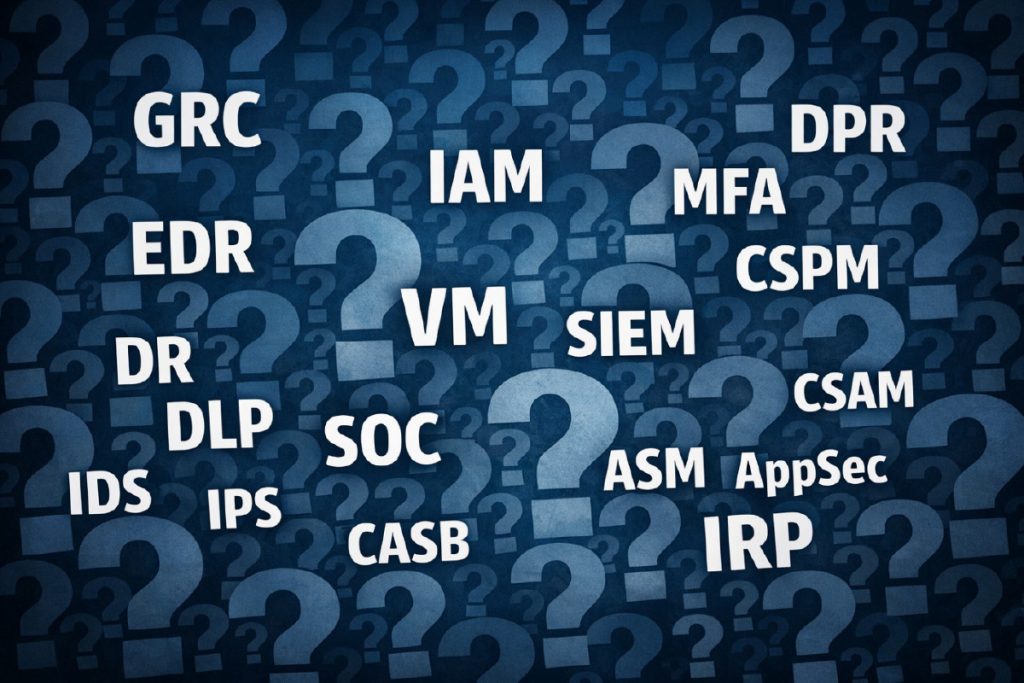
If you want executives to tune you out, start talking in acronyms.
If you want them to lean in, talk about their business.
Most leaders don’t need a crash course in cybersecurity terminology. They need to understand what’s at risk, what it means to operations, and how it affects revenue, reputation, and their ability to keep the doors open.
That’s where a lot of IT conversations go wrong. We default to industry language instead of translating it into real-world impact.
Here’s what that shift looks like in practice.
Instead of talking about governance, risk, and compliance, frame it as understanding where the business is exposed, making sure you’re following the right rules, and avoiding issues that can slow things down or create legal and financial problems later.
Instead of endpoint detection and response, explain that it keeps laptops and workstations from turning into a problem that spreads across the entire company because of one bad click or one missed threat.
When you bring up vulnerability management, you’re really talking about finding weak spots early and fixing them before they turn into something disruptive or expensive.
Disaster recovery isn’t about backups and replication. It’s about whether the business can keep running when something goes wrong, and how quickly you can get things back on track.
Data protection and privacy comes down to protecting the information your business depends on — client records, financial data, employee data — so you don’t lose trust, revenue, or your reputation.
Security monitoring? That’s simply catching problems early instead of finding out after the damage is already done.
Identity and access management is making sure the right people have access to the right systems, and just as important, that the wrong people don’t.
Cloud security is about making sure your systems stay secure as you grow, scale, and rely more on online tools.
Application security is preventing issues from being built into the systems your team depends on every day. Fixing problems early is always cheaper than fixing them later.
Incident response planning is having a clear, agreed-upon plan so that when something does happen — and it eventually will — your team isn’t scrambling to figure things out in the moment.
Training and awareness is about your people. It’s helping them recognize risks and avoid common mistakes, because in most cases, the biggest vulnerability isn’t technical — it’s human.
And asset visibility? That’s simply knowing what you actually have. You can’t protect what you don’t know exists.
At the end of the day, executives aren’t buying cybersecurity tools. They’re investing in business protection.
They want to know: Will this keep us running? Will this protect our clients? Will this reduce risk? Will this prevent costly downtime?
If you can answer those questions clearly, you don’t need the jargon.
Drop the acronyms. Speak in outcomes. Tie everything back to the business.
That’s when the conversation starts to matter.